Choose a question, not an entire lifetime
The most useful starting point is a question someone might ask: where did a relative live, which year was a journey, or who sent these letters? Pick one box or bundle connected to that question. You are establishing a repeatable method, not promising to finish the whole family collection this weekend.
Set aside a clear, dry table away from drinks, food, direct sunlight and pets. Work with clean, dry hands for ordinary paper. For photographic surfaces, avoid touching the image and consider well-fitting nitrile gloves when appropriate to the material. Loose cotton gloves can reduce dexterity and catch on damaged paper. Support each item rather than lifting it by one corner.
Observe before rearranging
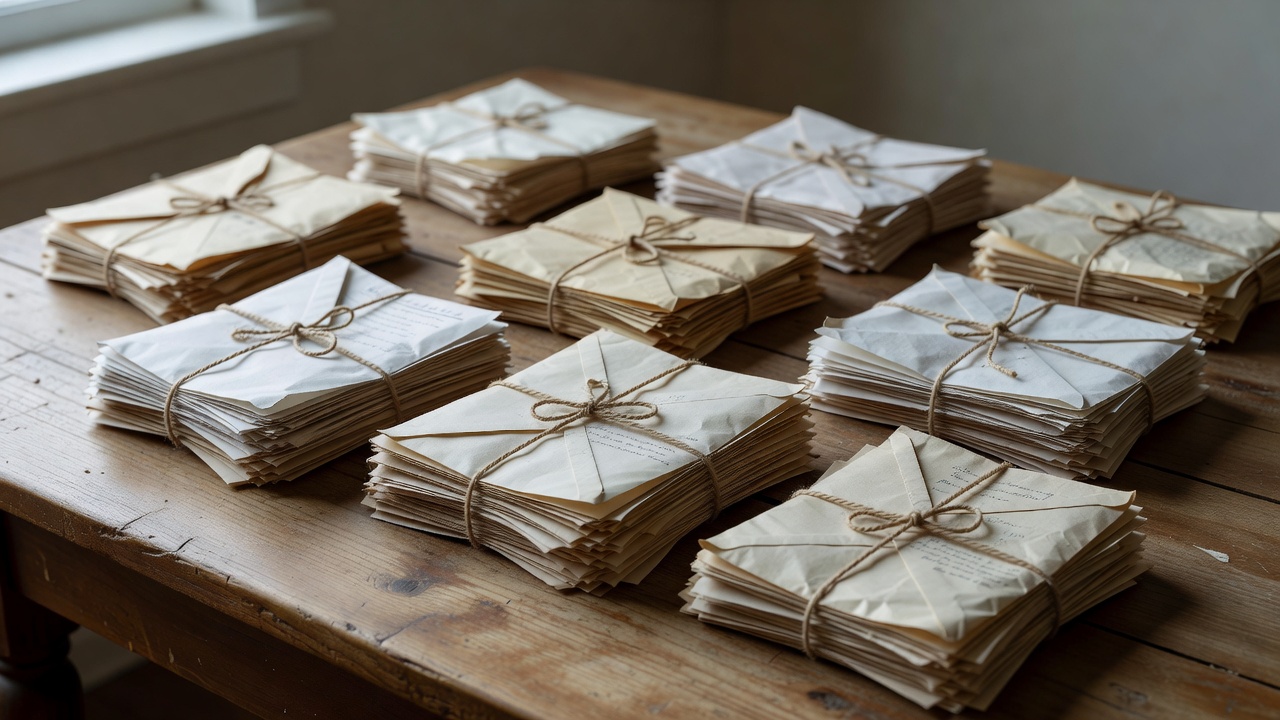
Take a simple reference photograph of the box as opened. Note any labels, envelopes, bindings and apparent groupings. A bundle may reflect a person’s filing habits; an envelope may explain photographs that otherwise seem unrelated. Record that relationship before moving anything.
Archivists often describe this as respecting provenance and original order. The International Council on Archives discusses these ideas within archival description, including ISAD(G). A home collection does not need institutional paperwork, but the underlying question is helpful: who brought these records together, and what did their arrangement mean?
If the box is already mixed, say so. Do not reconstruct a supposedly original order from a hunch. You can create practical working groups while recording that the present arrangement is yours.
Make three decisions gently
- Record the group. Give the box a simple reference such as Box 01. Write a short inventory in a separate notebook or spreadsheet: contents, approximate dates, current location and any handling concerns.
- Identify a safe next action. Separate ordinary sorting from items that need advice. Keep related materials together using supportive enclosures rather than attaching new labels to their surfaces.
- Set a review boundary. Choose one manageable folder for capture. Leave unclear ownership, sensitive records and difficult duplicates for a deliberate second pass.
Use broad categories only when they help retrieval: correspondence, photographs, household records or a named person. Do not make a folder for every tiny distinction. A short list you can maintain is better than an elaborate system that stops after the first evening.
Separate sentimental, practical and legal value
A restaurant receipt can explain a cherished trip. A plain certificate may carry legal importance. These are different reasons to retain something, and neither is captured by how attractive it looks. Mark important originals clearly in your inventory without writing on them or assuming that a scan can replace them.
For wills, property papers, identity records, medical information and financial documents, establish who is entitled to access them. Retention requirements depend on jurisdiction and circumstance. Ask the appropriate legal or administrative professional before destroying originals. This website offers organisation guidance, not legal advice.
A decision postponed and recorded is better than a relationship lost in a hurried sort.
Keep privacy visible from the beginning
Add an access note to the inventory: open within the family, restricted, or review required. Letters may mention living people who never expected their details to appear online. A shared family interest is not automatic permission to publish an address, a diagnosis or an intimate account.
For potentially distressing material, agree a pace and a stopping point. You can describe the existence of a sensitive folder without transcribing its contents. Keep access decisions separate from factual description so they can be reviewed as circumstances change.
Finish the session with a useful handover
Before clearing the table, record where everything went and what remains unresolved. Note any temporary groups you created. Put the inventory somewhere that will be backed up, and leave a brief paper note with the box explaining where the digital list lives. Avoid including passwords in that note.
The UK National Archives and the Library of Congress preservation resources offer further background on caring for records. Use their guidance to recognise limits, not to attempt unfamiliar treatments. When one group is safely identified and its context is recorded, you are ready for the next small step.
Next: Capture the whole object